
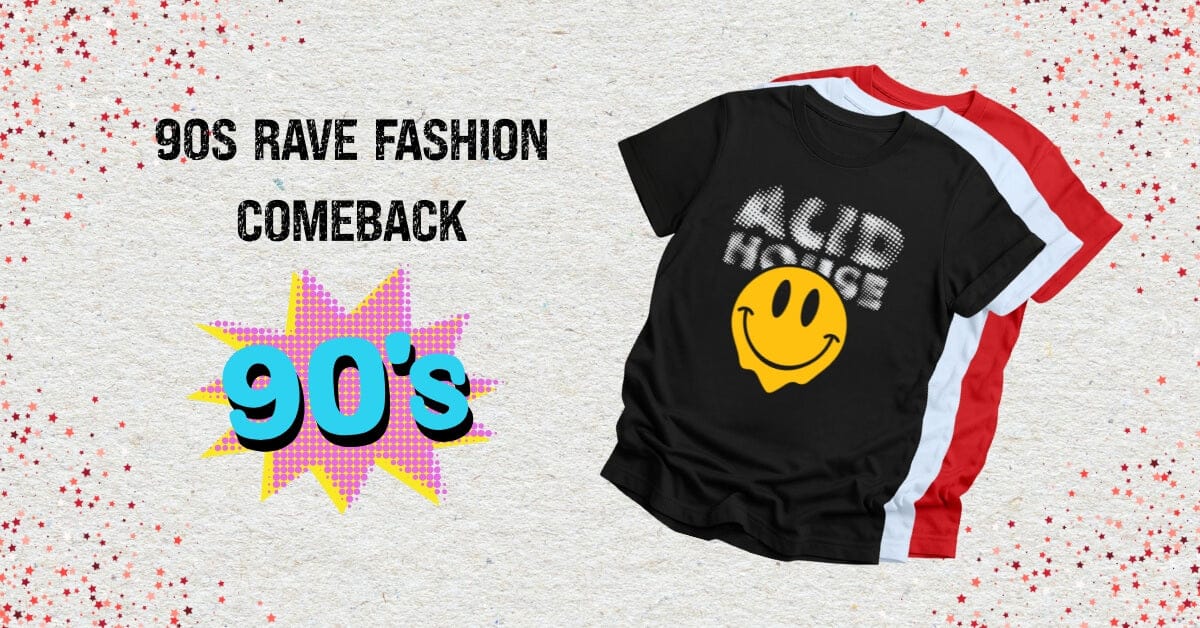
Rave and Club Culture: Neon, PVC, and Phat Pants
While the mainstream was wearing khakis and denim, the “underground” was experiencing a neon-soaked revolution. The rave and club culture of 1999 had a massive influence on youth fashion, bringing “maximalism” back to the streets.
The most famous garment from this scene was the “Phat” pant. These were trousers with impossibly wide leg openings—sometimes reaching 50 inches in circumference—designed so that the wearer’s legs would look like they were floating or gliding while dancing. Brands like JNCO and Kikwear became legendary for these styles, which often featured reflective tape and massive back pockets. The “club kid” aesthetic also embraced high-visibility colors and synthetic materials. PVC miniskirts, neon-green mesh tops, and “fuzzy” faux-fur accessories were standard for a night out.
This was a playful, almost “infantile” style that included wearing plastic pacifiers as necklaces, butterfly clips in the hair, and “candy” (colorful beaded bracelets). This subculture rejected the seriousness of the ’90s “heroin chic” look in favor of “PLUR” (Peace, Love, Unity, Respect) and pure, unadulterated fun. By the end of 1999, elements of this look—like neon accents and tech-wear materials—had bled into mainstream pop music videos, making “rave-lite” a global fashion staple.
The sheer scale of the “Phat pants” served as a protest against the shrinking, minimalist silhouettes of the mid-decade, while the use of PVC and neon spoke to a desire to be seen in the dark, crowded spaces of dance floors. This culture also pioneered the use of “glow-in-the-dark” textiles and “blacklight-reactive” pigments, which would later become a staple in 99formed.com modern festival wear. The rave scene of ’99 wasn’t just about the party; it was about creating a visual identity that was as loud and energetic as the electronic music itself. It was a celebration of individuality and communal joy, expressed through the loudest and most unconventional clothes imaginable—a legacy that continues to influence the global festival-wear industry today.